|
|

|

|
|
|
Acupuncture, Trauma and SomatizationLike psychedelics, acupuncture has been shown to attenuate the default mode network in the brain. And like psychedelics, this is dose, context, and relationship dependent, which reflects the point of broader systems of medicine it traditionally works within, and that are often dismissed when conventional healthcare attempts to incorporate acupuncture as a simple procedure of placing needles where there is pain. These homeodynamic systems recognize that the body is not a static machine that diseases are superimposed on top of. Rather, treatments are informed by what is now understood as autonomic tone, immune status, nutrition status, etc. Chinese medicine and related systems have long reflected what has only recently been discovered in conventional care, that trauma, adverse childhood experiences, and PTSD can affect long-term physical health. But with a model informed by centuries of clinical practice, that understands the body does not “keep the score” as a passive storage unit. Rather, emotional states can remain incompletely processed and continue to shape behavior and physiology through subcortical, autonomic, interoceptive, and sensorimotor systems outside ordinary conscious awareness. The acupuncture meridian system might best be understood as a map of how emotional states are “somatized”. Below are recordings of the work of Jesse Peterson, L.Ac., in combining acupuncture and mindfulness to help patients reprocess trauma by reversing this somatization. The basic model is:
Together, this combination appears to reproduce some of the core therapeutic effects associated with psychedelic therapy, but in a more gradual, body-centered, symptom-specific, and clinically controlled way:
An LAC can begin with practical and medically familiar entry points including physical medicine, conduct basic health screening, and provide immediate symptom relief with acupuncture for pain, anxiety, tension, sleep disturbance, or stress-related complaints. LACs typically include nutrition and lifestyle counseling, and stress management, helping patients improve self-regulation and reduce the physiologic burden that often underlies chronic symptoms. In some patients, this progress can clear the way for deeper emotional processing through a more advanced combination of acupuncture and mindfulness. Not as a rapid pharmacologic disruption of ordinary consciousness, but through a more grounded, body-centered process in which symptoms, interoception, and emotional awareness become more integrated over time. Together this all unfolds within an established provider-patient relationship, at the patient’s pace, and in a way that is symptom-focused, clinically observable, and compatible with broader healthcare settings. But acupuncture and mindfulness do so through an ongoing medical relationship that can begin with physical medicine, health screenings, and simple symptom relief through acupuncture for pain and anxiety, bodily regulation, and lifestyle counseling. This then clears the way for an experienced provider to build upon this progress with deeper emotional processing that is more grounded than a rapid pharmacologic disruption of ordinary consciousness. And this unfolds within an established provider-patient relationship, the process can proceed gradually, at the patient’s pace, and in a body-centric, symptom-focused way that remains compatible with broader healthcare settings. Nicolette
Autoimmunity, pain, fatigue, digestive issues, anxiety, cPTSD
"Nicolette" is a long-term acupuncture patient who sought relief from a complex array of inflammatory symptoms, including pain from autoimmunity, severe fatigue, digestive issues and anxiety. She experienced immediate relief from acupuncture treatment that included nutrition and lifestyle counseling. As she improved, introducing mindfulness and mindbody strategies further improved and resolved most of these symptoms, and the connection between her history of trauma and symptoms of cPTSD has become more defined and accessible. This included unreliable caretakes, abandonment, and sexual assault at age nine by a medical doctor who performed an unnecessary appendectomy. This was part of a pattern of abuse in the French healthcare system that was outlined in this recent case:
These two recordings are from the second and third acupuncture sessions from a course of four. She had returned again to acupuncture after bodywork brought up this assault, triggering pain aneanxiety. We decided to record the sessions where we used acupuncture, and an understanding of these as MindBody symptoms functioning as "defense mechanisms" that had long prevented her from accessing and processing this trauma. These are excellent examples of MindBody connection, and how acupuncture can be used similarly to "psychedelic therapy," as acupuncture has also been shown to attenuate the same regions of the brain and limbic system psychedelics act on. In this recording, she explains now the previous acupuncture treatment had allowed her to process this trauma more deeply, including accessing feelings of terror and powerlessness. Download NT1.2022_11_08.mp3 (35:02) In this recording of the third session, as these feelings are explored, she is able to understand how internalizing trauma as self-worth issues and dysmorphia gave her a sense of justification, and control. The acupuncture followed this conversation, where she cried through the whole 20 minutes, which she reported gave her a deep sense of catharsis and relief. Download NT2.2022_11_11.mp3 (22:12) Revisiting this five months later, "Nicolette" states "I don't have the same feelings of powerlessness." Here is her describing this before hearing the above recordings. Download NT4.2023_03_27.mp3 (3:20) A few days later she describes the affect of listening to them, and the benefits of being better able to process her emotions and integrate aspects of trauma. This includes the lack of acknowledgement of the assault, and the childhood instability and abandonment she experienced as a result of her Jewish family escaping the holocaust. Download NT5.2023_03_30.mp3 (9:31) Craig
Low back pain, diabetes, PTSD, VA Community Care
"Craig" was a referral to acupuncture from the VA's "Community Care" program for low back pain, who learned that this wasn't separate from his other problems including diabetes and PTSD relating to experiences in Vietnam. With this whole-person approach including acupuncture, nutrition, and mindfullness counseling, in less than two months his A1c dropped from 8.2 to 6.1 while going off insulin and semaglutide, was taken off hypertension meds when no longer needed, and understood the root of his PTSD. He states:
I have been an acupuncture patient for 3 months now and I have never experienced so much improvement from conventional medicine. I was on insulin for 8-9 years. With a combination of changing my diet and acupuncture I am feeling so much better, have renewed energy and have lost 35 lbs. This also helped get me through and understand my PTSD, which I suffered from for 5 decades. I am free from pain, restless leg syndrome, and insomnia - all of which were previously treated with pills, injections, creams, Rx and OTC meds.
As the body is not a machine with separate causes for individual problems, symptoms including chronic pain are often due to a combination of physical health, nutrition issues, and emotions. This means they must be addressed together. In this recording, Craig explains how doing so has allowed him to understand the "Mindbody" connection between pain, stress and PTSD, while experiencing major stressors in his life. Download craig1.mp3 (5:40) Regardless of the source of coverage, rarely is there any concern for continuity of care as acupuncture is treated as a commodity that is best stripped from the broader system of understanding of health that includes emotions and lifestyle, and our broader scope is whittled down to simply sticking needles where there's pain. When Craig had gotten off course with this lifestyle changes and his symptoms returned, the VA was sent to another licensed acupuncturist who simply administered musculoskeletal treatments, which he received no benefit from. Switching his VA referal back to the original LAC took another 7 months. Here we discuss recent news, while reviewing how trauma, emotions, and lifestyle all interact, as Craig makes quick progress getting back on track. Autoimmune Disorder and Childhood TraumaThis patient had suffered from a severe autoimmune disorder connected to significant trauma he faced as a child. This can happend when stress hormones and tension related to emotions limits bloodflow compounds with lifestyle and other issues over time. Here he texts after an acupuncture session to report how it helped him break through his resistance and coping mechanims, including substance abuse, to sit with the emotions related to his trauma that these mechanisms had been designed to avoid. Another example of how acupuncture not only relieves the tension-mediated symptoms in the body, but also in the brain and limbic system, to allow such a breakthrough. 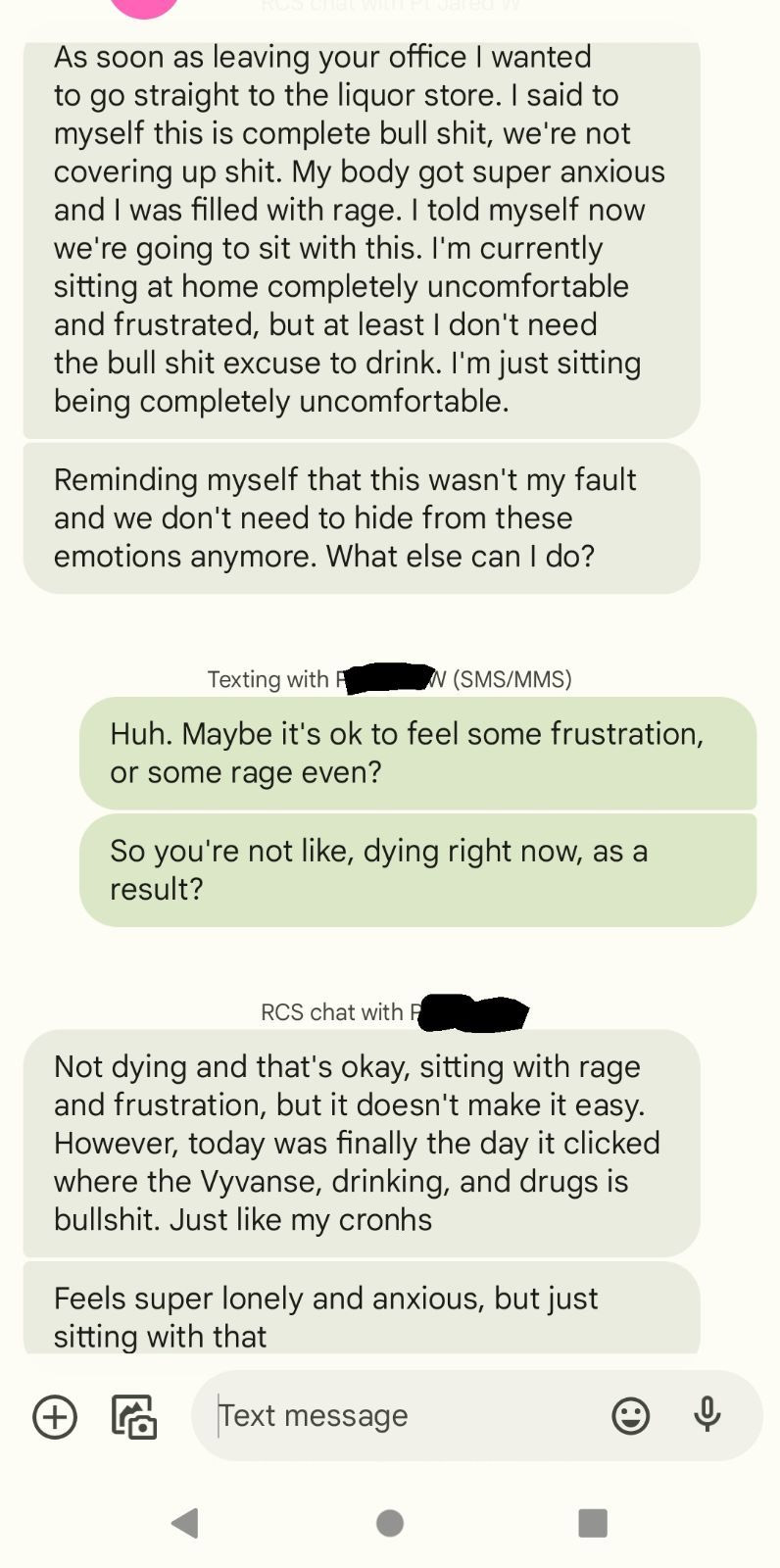
Tyler
Digestive symptoms, panic attacks, relationship issues, BPD
"Tyler" had first come to acupuncture treatment for relief from digestive symptoms, and help re-introducing animal products after many years of a plant-based diet. Months later he returned, after a car accident led to back pain, but also his first full-blown panic attack. Through a few months of acupuncture treatment, he recognized how childhood trauma and abandonment had led to a lack of skills dealing with his current life with a wife and two small children, and the need to deal with a diagnosis of BPD many years prior. On one occasion, Tyler asked to talk to me on the phone between treatments after he had been drinking. He wanted to talk about some of the difficulty with responsibilty he faced when raising his children, and how that might have been attached to instability he faced as a child. At a young age, his own father had come and gone in his life due to his parents unstable relationship, and he was frequently exposed to abusive step-parents and alcoholism. We later used this phone converation and the fact he'd used alcohol as "distress tolerace" to discuss these circumstances to understand the "mindbody connection." And how physical symptoms, including pain and digestive symptoms, functioned the same way: as distraction and control to tolerate emotional pain. A few weeks later, after an acupuncture session that also seemed to reduce some of his resistance to talking about difficult emotions, he called later in the day to report the effects. As our treatment sessions continued, we used this mindfullness and mindbody framework to futher develop his emotional processing skills. In this example, we combine these skills with acupuncture to access deeper emotions during an acupuncture treament. In this clip edited down from a longer conversation, the first 5:30 is discussion while he is first seated, and then laying on the treatment table during the acupuncture insertion. The recording pauses after I leave the room for the needle retention phase, and then skips to 20 minutes later when I return to find Tyler has gotten off the treatment table and is sitting in a chair, still with needles.
The video we discuss in this clip can be found here:
In this last recording, here the patient recounts over the phone how after a couple years of treatment, the clinical progress translates to real world benefits that aren't just "skills" but differences in perception and consciousness. |
|
|
|